
할리우드 로드와 필 스트리트가 만나는 교차점에 위치한 Jokya Korean Restaurant은 서울의 다이닝 문화를 홍콩 센트럴의 상징적인 지역에 새롭게 풀어낸 공간입니다. 스트리트 아트 벽화와 브라스 사인으로 포인트를 준 청록색 외관은 그레이엄 스트리트 벽화 인근의 창의적인 지역 분위기와 브랜드를 자연스럽게 연결합니다.
내부는 격자문, 곡선형 브라스 손잡이, 한옥에서 영감을 받은 창호 프레임과 같은 전통적인 한국적 요소를 콘크리트 바닥, 노출 덕트, 옥빛 그린 벽면 패널 등 현대적인 도시 소재와 조화롭게 결합했습니다.
공간 중앙을 따라 형성된 메인 다이닝 축과 에메랄드 컬러의 플루티드 타일로 마감한 비어 카운터는 약 1,200 sq.ft.의 컴팩트한 공간 안에 활기찬 소셜 리듬을 만들어냅니다.
Jokya 홍콩점은 한국의 전통성, 현대적인 편안함, 그리고 현지 시장에 대한 섬세한 해석을 조화롭게 담아낸 공간입니다. 대표 메뉴인 매콤한 시래기 감자탕과 반반 족발은 홍콩 고객의 입맛을 고려해 세심하게 조정했습니다.
따뜻한 조명과 세련된 인더스트리얼 감성, 현대적으로 재해석한 한국적 디테일을 통해 센트럴의 문화적 리듬 안에서 ‘서울의 일상적인 다이닝 문화’를 자연스럽게 구현했습니다.
홍콩 센트럴의 대표적인 거리 예술 명소인 그레이엄 스트리트 월 뮤럴(Graham Street Wall Mural) 바로 옆에 위치한 족야 & 무청은, 서울의 전통 한식 감성과 홍콩의 도시적 감각을 동시에 담아낸 현대적인 한옥 스타일의 레스토랑이다.
외부는 벽화와 황동 간판으로 장식되어 예술적인 거리 분위기와 어우러지며, 내부는 격자문, 한옥 문살, 황동 손잡이 등 전통 요소를 활용해 따뜻하고 차분한 공간감을 구현하였다. 천장을 드러낸 인더스트리얼 구조와 에메랄드 색 타일, 콘크리트 바닥이 조화를 이루며 도심 속에서도 한국의 정취를 느낄 수 있는 감각적인 다이닝 공간을 완성하였다.
대표 메뉴로는 매운 무청 감자탕, 족발&보쌈 세트, 막걸리와 전 메뉴 등을 현지 입맛에 맞게 구성하였다. 조명, 소재, 배치 모두가 만들어내는 부드러운 분위기 속에서, 손님들은 “서울의 일상적인 한상(韓相) 식문화”를 홍콩 중심가에서 경험할 수 있다.
프로젝트 세부 정보
공사 기간
2개월
위치
홍콩 센트럴
시그니처 소재
- 외관 벽면: 벽화 아트워크가 적용된 틸 컬러 렌더링 벽
- 사이니지: LED 백라이트의 브러시드 황동 3D 레터링
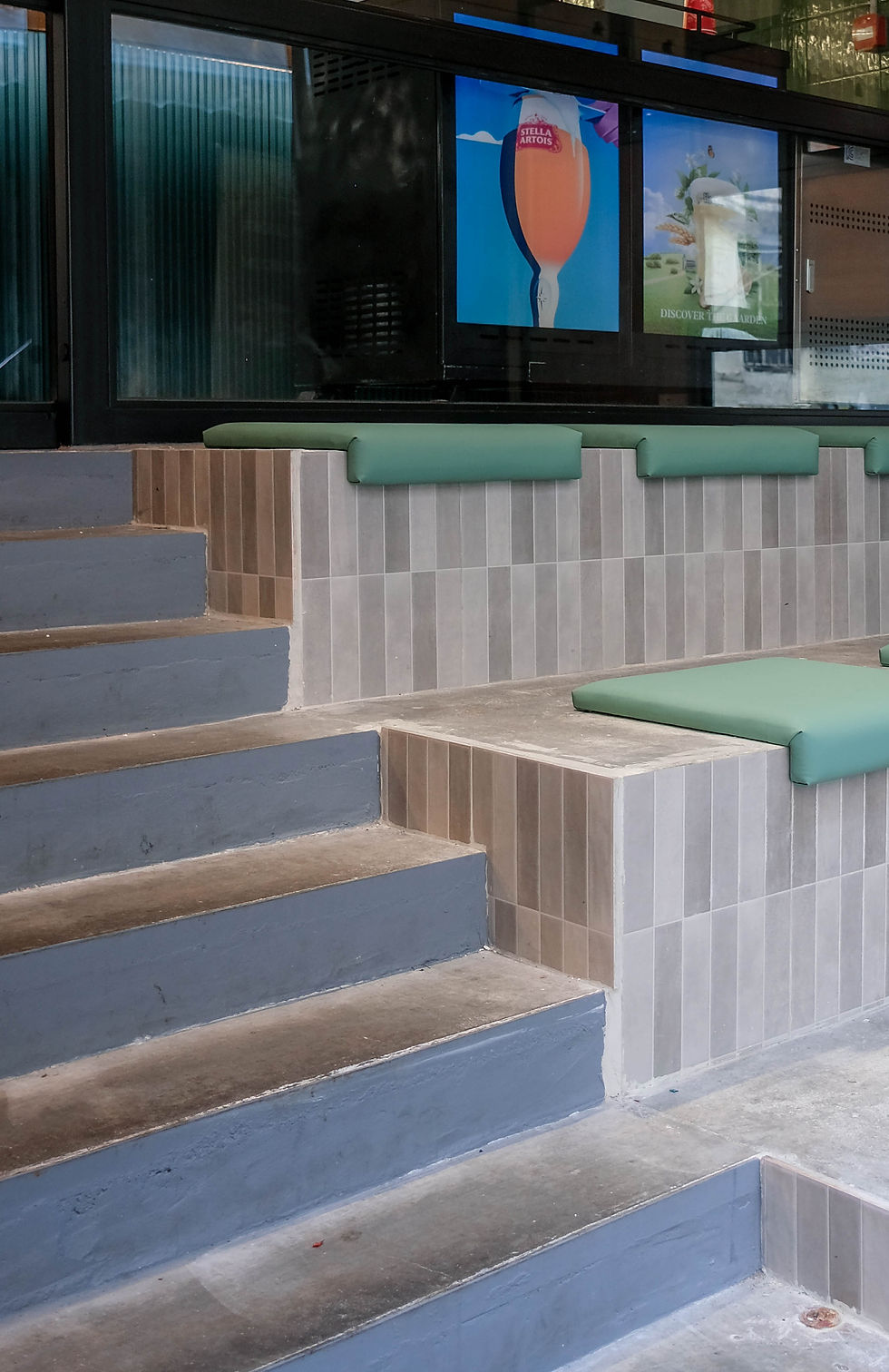
- 입구 계단: 계단 조명이 적용된 그레이 세라믹 타일
- 대기 벤치: 틸 컬러 업홀스터드 쿠션의 콘크리트 베이스
- 내부 벽면 패널: 황동 힌지와 한국 격자 패턴의 오프 화이트 래커 마감
- 피처 월: 황동 걸레받이와 로고 사이니지의 매트 틸 패널
- 천장: 차콜 그레이로 도장된 노출 덕트워크
- 다이닝 테이블: 틸 서클 포인트의 오프 화이트 라미네이트
- 좌석: 우드 베니어 의자와 틸 페이크 레더 벤치
- 바 카운터: 화이트 쿼츠 상판과 황동 트림의 에메랄드 플루티드 패널
- 백 바 월: 글로시 그린 서브웨이 타일
- 바닥재: 폴리시드 시멘트 스크리드
- 조명: 웜 톤 에디슨 전구와 천장 트랙 조명
- 장식 아트: 용과 호랑이 테마의 한국 모티프
영역
약 1,200 평방피트
년도
2025

컨셉 및 디자인 의도
디자인은 한국 전통 한옥 건축에서 영감을 받았습니다. 시그니처 격자 패널과 금속 경첩, 부드럽게 확산되는 조명을 통해 전통적 요소를 표현하는 동시에, 이를 현대적인 인더스트리얼 공간 안에서 새롭게 재해석했습니다.
노출 천장과 덕트의 거친 질감에 따뜻한 우드 패널을 조화시키고, 옥빛 그린과 무광 브라스 컬러를 포인트로 더해 세련되면서도 편안하게 다가갈 수 있는 분위기를 완성했습니다.
이러한 전통성과 현대성의 공존은 ‘현대적인 감각으로 다시 선보이는 전통’이라는 브랜드 철학을 반영합니다. 개방성과 연결성을 강조한 공간 구성은 컴팩트한 도심형 매장 안에서도 함께 즐기는 다이닝과 보다 프라이빗한 좌석 경험을 모두 가능하게 합니다.
공간 전략/계획 논리
레스토랑은 L자형 코너 구조를 활용해, 도로를 향한 여러 창문으로 들어오는 자연광을 최대한 끌어들일 수 있도록 계획했습니다. 좌석은 중앙 동선을 중심으로 배치했으며, 연속형 벤치 좌석이 다이닝 공간을 자연스럽게 구분해 원활한 이동과 편안한 이용 환경을 제공합니다.
그린 플루티드 타일과 브러시드 브라스 디테일로 마감한 전용 맥주 및 음료 카운터는 공간의 중심을 잡아주는 동시에, 고객 간의 자연스러운 교류를 유도하는 핵심 포인트로 기능합니다.
콘크리트 계단과 그린 쿠션 좌석으로 구성된 입구 계단 공간은 실내와 거리 사이에 반개방형 전이 공간을 형성하며, 레스토랑의 존재감을 외부까지 시각적으로 확장합니다.
갤러리


재질감 및 디테일
컬러와 질감, 인더스트리얼 대비를 통해 현대적으로 재해석한 한국적 장인정신
- 외관: 황동 사이니지와 벽면 조명이 적용된 텍스처드 틸 컬러 벽화
- 내부 벽면: 한국 전통에서 영감을 받은 금속 공예와 조명이 적용된 격자 패턴의 오프 화이트 패널
- 카운터: 쿼츠 카운터탑과 황동 트림이 적용된 딥 에메랄드 플루티드 수직 패널
- 천장: 인더스트리얼한 대비를 강조하는 차콜 그레이 노출 덕트워크
- 바닥재: 유지 관리가 편리한 은은한 매트 마감의 폴리시드 콘크리트
- 포인트 요소: 부드러운 톤의 따뜻함을 더하는 웜 에디슨 전구의 맞춤 제작 조명 기구

프로젝트 목표 및 결과
이번 프로젝트는 그레이엄 스트리트 벽화 지구를 찾는 현지 홍콩 고객과 해외 방문객 모두에게 매력적으로 다가갈 수 있는 차별화된 한국식 다이닝 공간을 구축하는 것을 목표로 했습니다.
약 1,200 sq.ft.의 컴팩트한 공간 안에서 문화적 정통성, 공간 효율성, 그리고 강한 시각적 정체성 사이의 균형을 중심으로 디자인 전략을 수립했습니다.
격자무늬, 따뜻한 우드 톤, 전통에서 영감을 받은 디테일과 같은 한국적 디자인 요소를 현대적인 인더스트리얼 소재와 결합함으로써, 공간은 정통성과 현대성을 동시에 느낄 수 있는 분위기를 구현했습니다. 이러한 접근은 센트럴의 활기찬 미식 지역 안에서 Jokya를 프리미엄하면서도 친근하게 접근할 수 있는 한국 레스토랑으로 포지셔닝하는 데 기여했습니다.
완성된 공간은 레스토랑의 거리 가시성을 효과적으로 강화하는 동시에, 편안하고 기억에 남는 다이닝 경험을 제공합니다. 개성 있는 파사드와 따뜻한 실내 분위기, 세심하게 구성된 소재 팔레트는 벽화 관광객, 인근 직장인, 저녁 방문객 등 다양한 고객층의 관심을 끌며, Jokya를 센트럴의 다이닝 시장에서 쉽게 인식할 수 있는 대표적인 K-푸드 공간으로 자리매김하게 했습니다.
협업 및 제약 조건
이번 프로젝트는 레스토랑 운영자, 브랜드 관계자, 디자인·시공팀 간의 긴밀한 협업을 바탕으로 진행되었습니다. 이를 통해 공간 디자인이 브랜드 아이덴티티와 일관되게 연결되는 동시에, 한국식 다이닝 공간에 필요한 실제 운영 요건을 충족할 수 있도록 했습니다.
센트럴의 기존 상업 건물 내에 위치한 만큼, 구조적 제약과 기존 건물 설비, 제한된 바닥 면적을 세심하게 고려해야 했습니다. 컴팩트한 공간 안에서 좌석 수를 최대한 확보하면서도 쾌적한 고객 동선과 명확한 서비스 흐름을 유지할 수 있도록 효율적인 레이아웃을 계획했습니다.
또 다른 핵심 요소는 주요 관광 명소인 그레이엄 스트리트 벽화와 인접해 있다는 점이었습니다. 이에 따라 주변 도시 경관과 시각적으로 조화를 이루면서도, 거리에서 뚜렷한 존재감을 드러낼 수 있는 디자인이 필요했습니다.
세심한 공간 계획과 소재 선정, 조명 디자인을 통해 이러한 제약 조건을 새로운 가능성으로 전환했습니다. 그 결과 운영 효율성과 시각적 차별성을 모두 갖춘 공간을 완성했으며, 센트럴에서 활기찬 한국식 다이닝 명소로서 레스토랑의 정체성을 더욱 강화했습니다.
족발 야시장 & 무청감자탕
센트럴
더 많은 프로젝트를 살펴보세요

그로브 카페 x 우리한식 @HKBU

bb.q 치킨

새마을식당
